
AI, data and the old question of who holds power in the HIV response
There is a lot of excitement about what artificial intelligence could mean for HIV. We are already seeing AI-enabled tools support self-care, provide health information, improve translation and help people navigate services. The possibilities are real, and some are genuinely exciting.
But as the conversation accelerates, I find myself wanting to step back from the technology and ask a more fundamental question: Who controls the data that makes AI possible, and who benefits from it?
I am not an AI expert. But through my work with communities and through the Lancet Commission on HIV and AI, where I co-lead the community working group, I have had the opportunity to listen to some very smart people wrestle with the technology, its applications and its governance. One thing has become increasingly clear to me: we risk spending too much time talking about the faucet and not enough about what is flowing through it.
AI is the faucet. Data is the resource. And that resource is deeply connected to questions of power and extraction.
When I think about AI, I cannot help but see echoes of the history of colonial extraction. For generations, resources were extracted from countries in the Global South, while much of the wealth generated from those resources accumulated elsewhere.
Today, data may be becoming another resource in that same dynamic. The countries and companies with the capital and infrastructure to build massive data centers and develop sophisticated AI systems are concentrated largely in the Global North. Meanwhile, people and communities around the world generate enormous amounts of data, yet often have little say over how it is used, who controls it, or who benefits from the value it creates.
Data flows out; value accumulates elsewhere.
The resource has changed. The question of who controls it has not. This matters enormously in global health. Data is not an abstract commodity. Data is about people. My health data is about me. My sexual health data is about me. My digital behavior can reveal things about me that I never intended to disclose.
In HIV, those stakes are especially high. Data can reveal HIV status, sexual behavior, relationships and other deeply personal information that remains stigmatized or criminalized in many places. AI could potentially help us deliver better prevention services. But it could also scale existing stigma and discrimination if we do not build the right safeguards.
One question that came up in our community discussions around AI was deliberately uncomfortable: What does consent mean in an AI world? Would you rather give someone your DNA or your entire web browser history?
Most people would hesitate over both. Yet we routinely generate and share enormous amounts of information through our phones, health systems, research studies and digital platforms. We may consent to one use of our data without knowing what that data might make possible years later.
What does informed consent mean when data can be reused indefinitely? Can consent expire? Can it be withdrawn? Who decides whether a new use is consistent with the original consent? And if my data generates scientific or commercial value, should some of that value return to me, or to my community? If our data helps create value, then we should also be asking what fair value looks like in return.
These are questions about power and equity and the HIV movement understands this. For decades, communities affected by HIV have not simply demanded a voice; they have generated knowledge, identified emerging problems and shaped solutions that health systems themselves often missed. That community intelligence matters even more in an AI-enabled world. AI can identify patterns at extraordinary scale, but communities understand what those patterns mean in people’s lives. AI should complement that intelligence, not displace it.
We’ve come too far to repeat that mistake with AI.
There is another dimension to this conversation: work.
AI may create new opportunities for people to translate, interpret and improve data and make systems more relevant to local languages and cultures. But we should be careful about celebrating these opportunities without asking what happens next.
If AI is ultimately deployed in the name of efficiency, whose jobs disappear? Are communities being brought in to train systems that will eventually replace them? Or are we using technology to give people better tools to do work that remains fundamentally human?
In HIV prevention, I believe the goal must be the latter. AI should increase capacity and power, not diminish them. Efficiency should augment human and community capability, not automate it away. When decisions affect people’s health, rights or safety, meaningful human oversight must remain.
And when AI gets something wrong, as every technology eventually will, there must be someone accountable and a meaningful way for people to challenge the decision.
But perhaps the biggest challenge is that this is a governance issue, not just a technology issue. Who is responsible for governing AI in health? Is it the ministry of health? Digital health authorities? Data protection regulators? Technology ministries? Ethics bodies?
Too often, it becomes everyone’s issue and therefore no one’s responsibility. We need governance that crosses these silos. And community governance must be part of that infrastructure, not an advisory layer added at the end, but a legitimate source of expertise and authority in setting the rules.
This is where the HIV movement has an important contribution to make. We have spent decades asking who has access to medicines, who controls research and who benefits from scientific progress. We now need to ask the same questions about data and AI: who owns the data? Who gets to use it? Who benefits from it? Who makes the rules? And who has the power to say no?
AI is already beginning to reshape the HIV response. The question is what kind of transformation we want.
If we want AI to help build a more equitable future for HIV prevention, we cannot focus only on developing better tools. We also have to build systems of ownership, accountability and governance that put communities at the center. The technology may be new. The challenge is not.
We have seen what happens when valuable resources are extracted from communities without giving those communities meaningful control over their value. We should not repeat that history with data.
And we should be careful not to confuse the ability to scale with evidence that something is worthy of scaling. AI can amplify benefit, but it can amplify harm and inequity just as efficiently. Before asking how fast a tool can scale, we should ask whether the evidence shows that it deserves to.
The future of AI in HIV should be shaped with communities, not simply built from data about them. That is how we ensure AI becomes a tool for shifting power, not another mechanism for concentrating it.
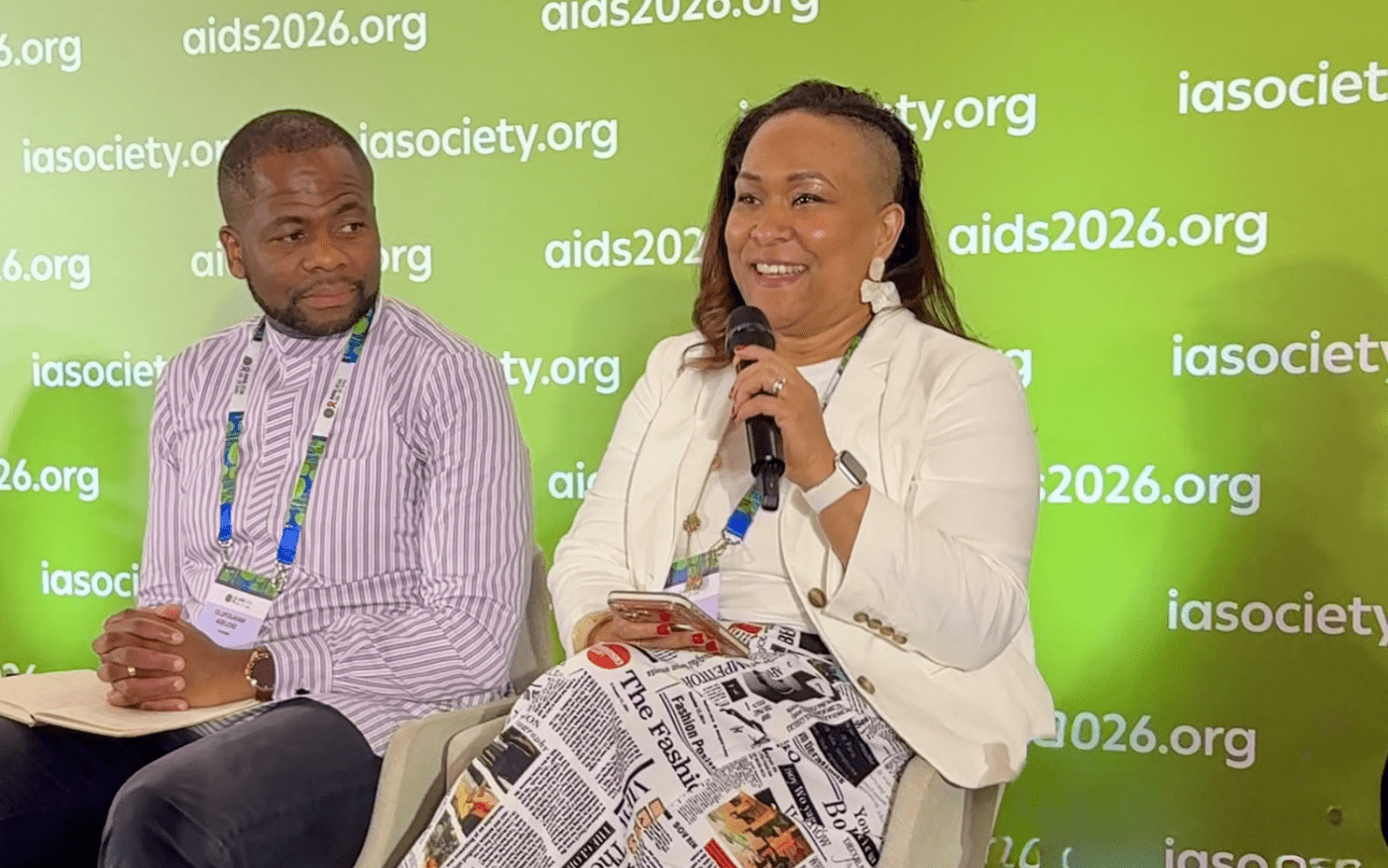
By: Solange L. Baptiste, ITPC Global