
Introduction
ITPC Global was founded in 2003 in Cape Town by 125 HIV activists from 65 countries, fighting for access to life-saving medicine. Evolving into a Global Activist Network, it championed community-driven advocacy beyond HIV and TB, challenging systemic health inequities.
Background
ITPC Global consists of three strategic pillars: Build Resilient Communities (BRC), Watch What Matters (WWM), Make Medicines Affordable (MMA). Build Resilient Communities aims to use treatment education to empower people living with HIV and their allies with information about HIV treatment and access issues. People living with HIV and their allies can use our resources to decide what to fight for, why to fight for it, and how to fight for it. By capacitating communities and treatment activists, they are able to work on issues that affect their health. The major goal of this strategy is to ensure recipients of care and communities remain at the center of all advocacy that is relevant to them. This strategy approach entails equipping communities with the knowledge, skills, tools as well as resources to carry out national and regional-level advocacy. This can take the form of training-of-trainer educational workshops, demand generation campaigns, and disbursement of small grants to support advocacy.
About the RFP
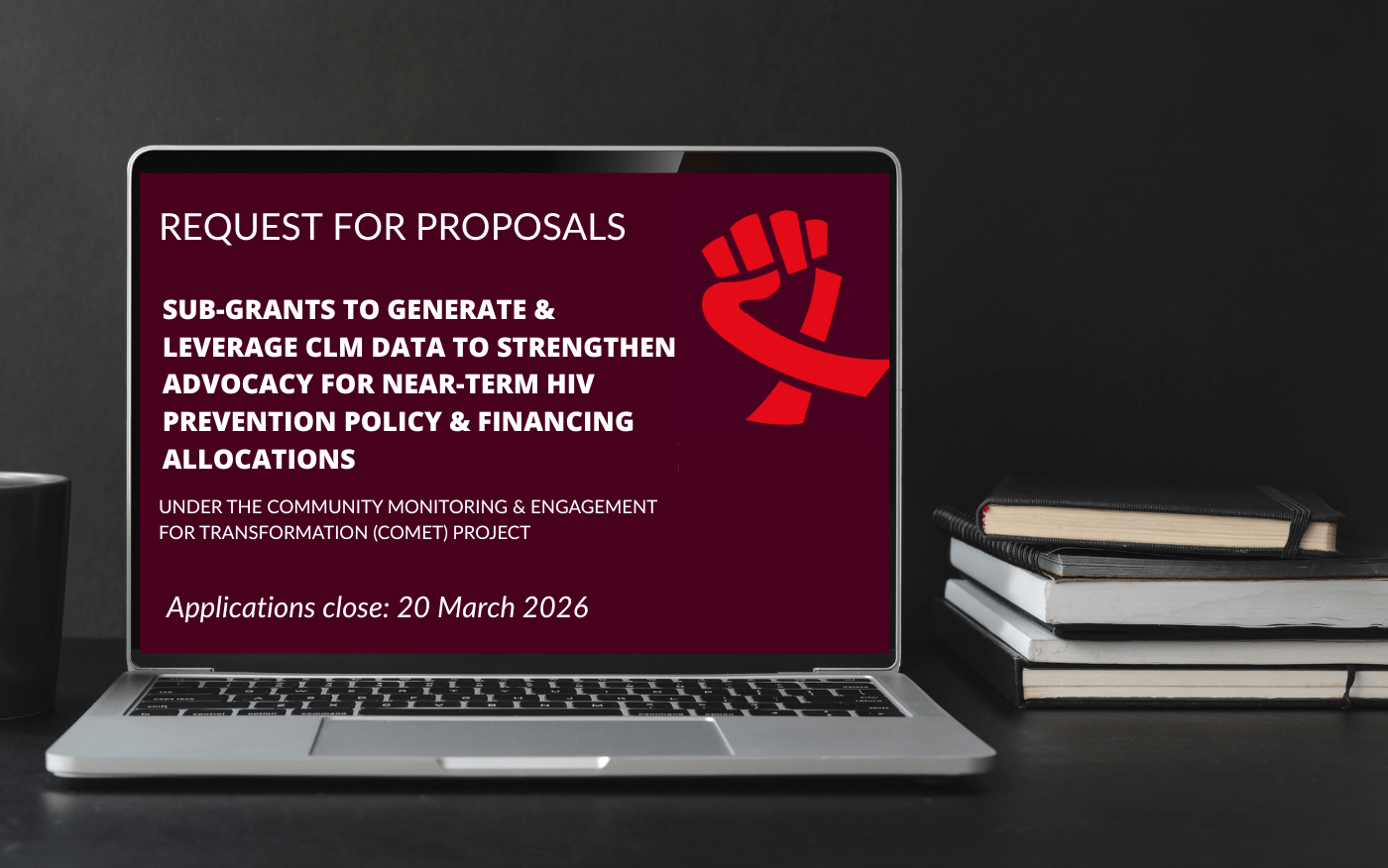
The global HIV and TB responses are being severely disrupted following the abrupt 2025 U.S. foreign aid cuts and parallel reductions from other donors. This has led to major program terminations, reduced access to HIV prevention services (including PrEP and CAB-LA), weakened health systems, and shrinking civic space across Southern Africa. Malawi, South Africa, and Zimbabwe are experiencing acute service disruptions, financing gaps, and instability in national HIV policy implementation.
ITPC’s Community Monitoring and Engagement for Transformation (COMET) project is a strategic response to this crisis. Component 2 of this program focuses on:
- Generating CLM evidence and health budget monitoring data to inform national HIV Prevention policy and financing shifts specifically for Long Acting HIV tools,
- Strengthening civil society engagement in national HIV decision-making,
- Tracking budgets, prevention policies, and policy commitments,
- Using community data to influence domestic resource mobilization and priority-setting at national and regional levels.
To support this work, ITPC seeks to engage three civil society organizations (CSOs) or HIV-focused NGOs as sub-grantees to provide high-level technical, analytical, and facilitation support for implementation across Malawi, South Africa, and Zimbabwe.
These organizations will play a critical role in generating community-led evidence to inform and influence policy and financing at both country and regional levels. Organisations can apply as individual organisations or partner with a maximum of two organisations if there clear skills and competency complementarities
Purpose of the Grant:
This RFP invites interested organizations to:
- Work in collaboration with ITPC technical, experts, and other country implementation partners to contribute to the development and contextual adaptation of a CLM health financing, budgeting and policy framework
- Contribute to the development of tailored indicator sets and tools to track HIV prevention financing — including domestic allocations, donor flows, and actual expenditures at sub-national levels
- Monitor public spending trends, identify inequities in sub-national allocation, and track what’s being spent, where, and by whom. This will include monitoring financing for the most effective long-acting prevention technologies, ensuring that investments reflect current scientific and community priorities
- Implement the CLM tool across Malawi, South Africa, and Zimbabwe
- Track and analyze available data on KP-related HIV prevention allocations and expenditures at sub-national levels, using publicly accessible budget and programmatic data where feasible
- Generate, analyze, and strategically leverage CLM-derived financing and policy data
- Expand and adapt the CLM model to build the evidence base to monitor shifts
- Use the generated data from CLM and budget monitoring to influence near term HIV prevention policy
- Use the generated data from CLM and budget monitoring to influence HIV prevention financing from domestic resources
Eligibility Criteria
Applicants must:
- Be a legally registered HIV civil society or NGO operating in Malawi, South Africa, and Zimbabwe
- Demonstrate minimum 3-5 years of experience in community engagement and CLM
- Experience working with health financing, budget monitoring and accountability , and policy
- Have minimum 3 years of experience in development of CLM data collection, analysis, and evidence-based advocacy
- Have a track record of working on HIV, TB, emergency response, health emergencies and/or health system strengthening initiatives, and integration of services
- Experience with implementing advocacy plans based on data collected
- Experience working with key and vulnerable communities
- Experience working with Ministries of Health, and local, national and regional stakeholders
Grant Deliverables
- Financing and Policy Landscape Assessment: Undertake an initial assessment of the HIV prevention financing and policy environment to identify priority gaps, trends, and opportunities for advocacy engagement.
- Co-Development and Adaptation of CLM Financing Tools: Contribute to the development or contextual adaptation of CLM tools and indicators to monitor HIV prevention financing, budgeting, and policy implementation within the country context.
- Implementation of Financing-Focused CLM: Implement agreed CLM activities to monitor HIV prevention financing flows, allocations, and expenditure patterns at national and relevant sub-national levels.
- Analysis and Production of Evidence: Analyze collected data and generate periodic evidence outputs that highlight trends, gaps, inequities, and priority issues related to HIV prevention financing and policy commitments.
- Advocacy and Stakeholder Engagement: Leverage CLM-generated financing data to inform and support advocacy efforts, policy dialogue, and engagement with relevant national and regional stakeholders.
- Reporting and Learning: Document findings, advocacy engagement, challenges, and lessons learned to inform ongoing programmatic and policy efforts.
Grant Budget & Duration
- Funding will be awarded based on the scope and scale of the proposed project.
- Grants will cover training, meetings, data collection, staffing costs and all travel costs including the dissemination of findings to relevant stakeholders.
- The grant period is expected to last a maximum of 12 months (1 April 2026 – March 2027).
Submission Deadline
All proposals must be completed using the application template below and submitted by Friday March 20, at 23.59 SAST to admin@itpcglobal.org with the subject line: “Proposal Submission: CLM Health Policy & Financing“.
Proposals that are incomplete, not responsive to these criteria, and are submitted after the deadline will not be considered.
For any inquiries, please contact admin@itpcglobal.org