
-
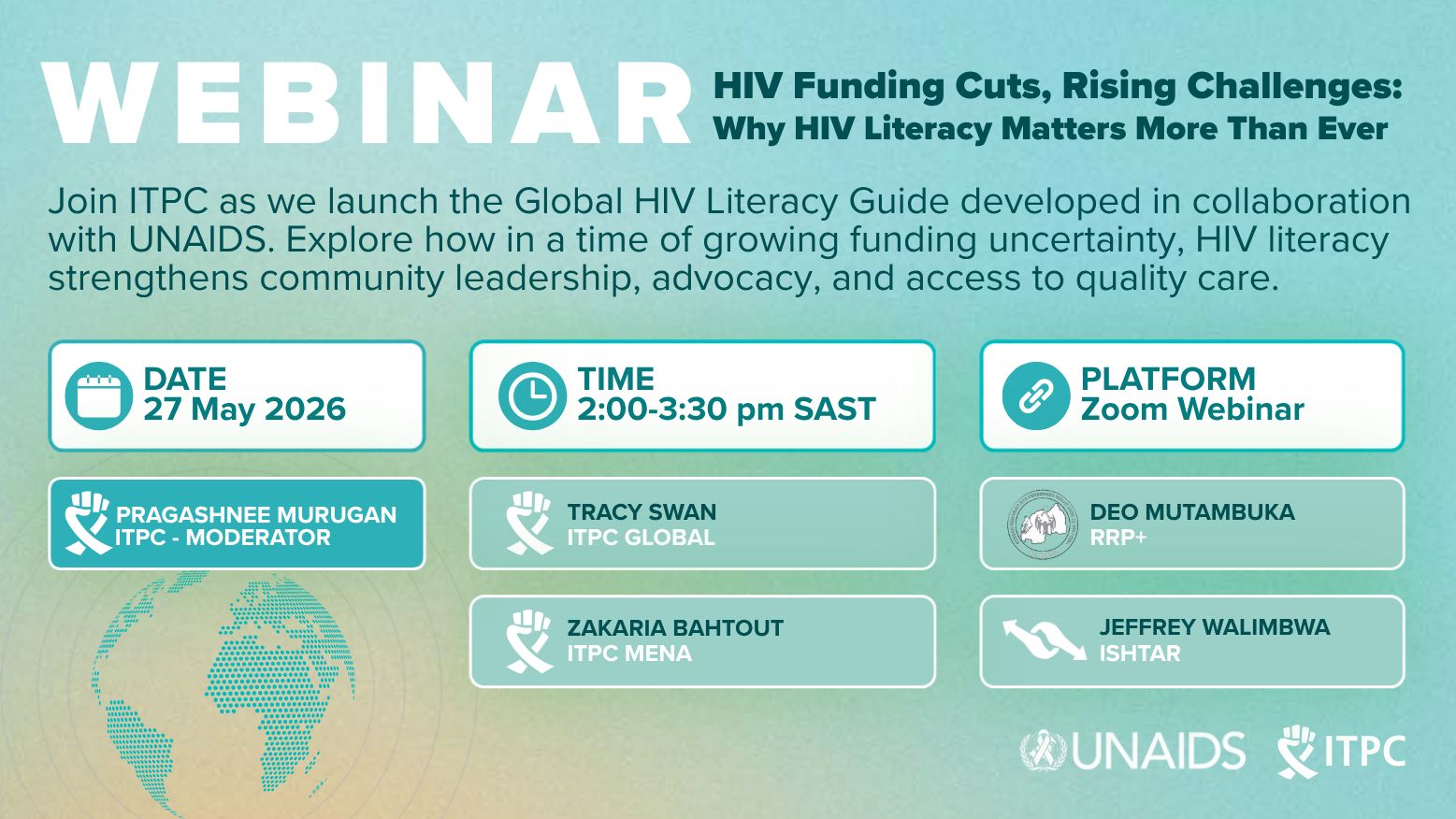
HIV Funding Cuts, Rising Challenges: Why HIV Literacy Matters More Than Ever!
Date: 27 May 2026 | 2:00 –3:30 PM SAST Register Here: https://shorturl.at/jeJqZ Join us for the webinar, “Funding Cuts, Rising Challenges: Why HIV Literacy Matters More Than Ever,” as we launch the Global HIV Literacy Guide developed in collaboration with Joint United Nations Programme on HIV/AIDS. In a time of growing funding uncertainty, misinformation, and changing health systems, this discussion will explore how HIV literacy strengthens community leadership, accountability, advocacy, and access to quality care. Connect with communities as we hear from: Learn how communities have reshaped HIV literacy through lived experience and advocacy to navigate funding challenges, strengthen community…
-
AI 101 Training for Communities
AI is already making decisions that affect our health, our information, and our community, whether we are at the table or not. That is why ITPC, in partnership with Audere, hosted a webinar on Tuesday 05 May 2026, designed to increase our knowledge and awareness. WHAT WE LEARNED WHY IT MATTERS AI is not a distant technology. It is here, and it is influencing outcomes in ways that can either close or widen existing gaps depending on who is involved in designing it. Communities shouldn’t just use AI. They should influence it. The difference between being shaped by AI and…
-
![Global Solidarity: From Georgia to Brazil and Beyond in the Fight for Affordable Medicines [podcast]](https://itpcglobal.org/wp-content/uploads/2026/05/MMA-podcast.jpeg)
Global Solidarity: From Georgia to Brazil and Beyond in the Fight for Affordable Medicines [podcast]
In this episode of Make Medicines Affordable, Tracy Swan speaks with Mari Chokheli, consultant and project coordinator at TB People in Georgia, and Veriano Terto Jr, public health researcher and longtime HIV/AIDS activist from Brazil, about how the fight for access to medicines is evolving in a rapidly changing world. Reflecting on the 2025 global ITPC summit, they discuss the impact of rising authoritarianism, shrinking civil society space, and major funding cuts on health, advocacy, and human rights. Veriano explores how global inequality, exposed by COVID-19, continues to limit access to treatment, while Mari shares a powerful, on-the-ground perspective from…
-
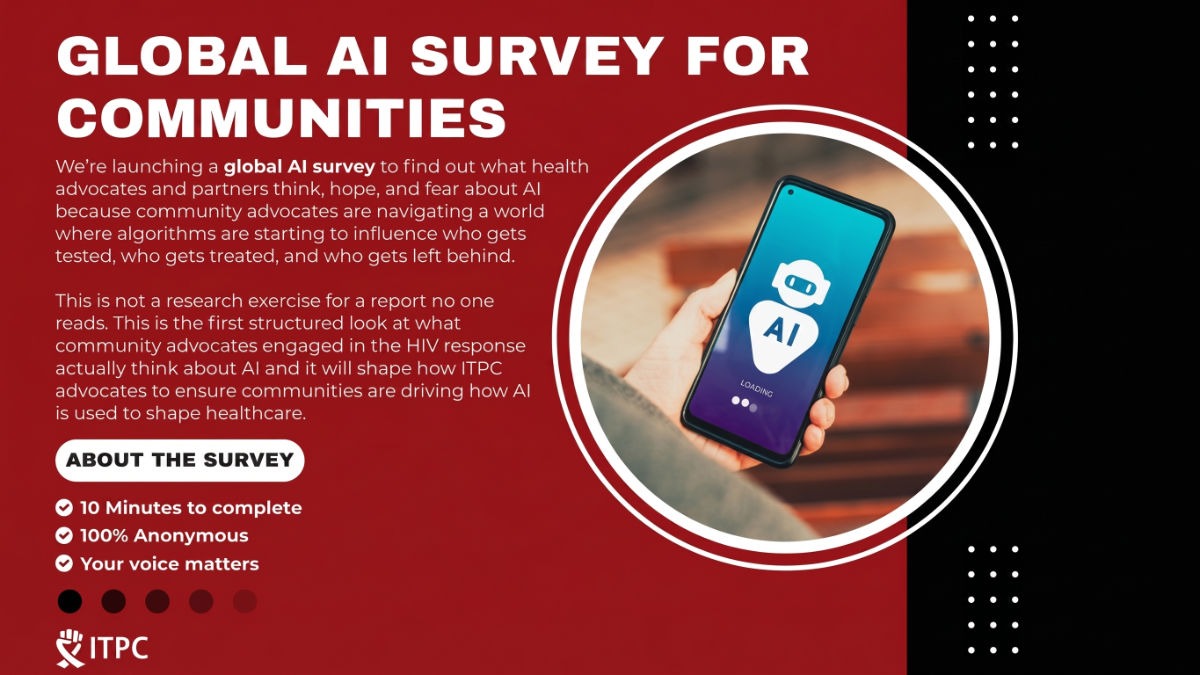
Global Community AI Survey
AI is reshaping healthcare. ITPC is launching a rapid survey across our Global Activist Network to document what frontline health advocates and partners in 50+ countries think about AI in HIV and health. This is not a representative global sample. It is something more useful and more urgent: the first structured look at what community advocates already engaged in the HIV response across 50 countries think, hope, and fear about AI. No other organization in HIV has this kind of global data. ITPC does, because ITPC has the network. Take the survey (10 minutes, anonymous): Want to stay connected on…
-
New report documents Make Medicines Affordable campaign efforts to address patent barriers to bedaquiline for tuberculosis treatment
The South Centre has recently published the report “Global Activism to Make Patented Drugs More Accessible: An ITPC Case Study of Bedaquiline for Treatment of Tuberculosis”, written by Priti Patnaik. The report documents the outcomes of civil society efforts to address patent barriers affecting access to the tuberculosis drug bedaquiline, a key medicine used in the treatment of drug-resistant tuberculosis. The case study focuses on advocacy and legal actions undertaken by civil society organizations in Brazil, Ukraine, Thailand, Belarus, India, Kazakhstan, Kyrgyzstan, Moldova and Vietnam, countries involved in ITPC’s Make Medicines Affordable campaign. According to the report, these actions included…
-
![MMA: From IP law to activism – access to medicines in Ukraine [podcast]](https://itpcglobal.org/wp-content/uploads/2026/04/MMA-podcast.png)
MMA: From IP law to activism – access to medicines in Ukraine [podcast]
In this episode of Make Medicines Affordable, host Tracy Swan speaks with Ukrainian IP and access-to-medicines advocate Anastasia Homeniuk of 100% Life. Anastasia shares how attending her first global IP summit inspired her to join the fight for affordable, life-saving medicines. She opens up about doing advocacy work during wartime, the emotional power of global activist solidarity, and why rage, unity, and hope keep her going. Anastasia also breaks down the complex intersection of EU integration, patent reform, and the urgent need to protect access to medicines in Ukraine’s fragile healthcare landscape. This is an inspiring, deeply human conversation about activism, perseverance, and why IP reform…
-
UNAIDS & ITPC release Global Reference on HIV Literacy
HIV literacy has long been a cornerstone of the global HIV response. It enables people living with HIV and the communities around them to understand prevention options, navigate treatment pathways, and access the care and support they need. Its impact reaches across the response: improving health outcomes, sustaining engagement in services, driving demand, and supporting adherence to life-saving treatment. HIV literacy also strengthens communities’ capacity to advocate for equitable, high-quality, people-centered responses, which is central to the global commitment to end AIDS as a public health threat. Communities at the centre of progress Communities have always driven progress. Through leadership…
-
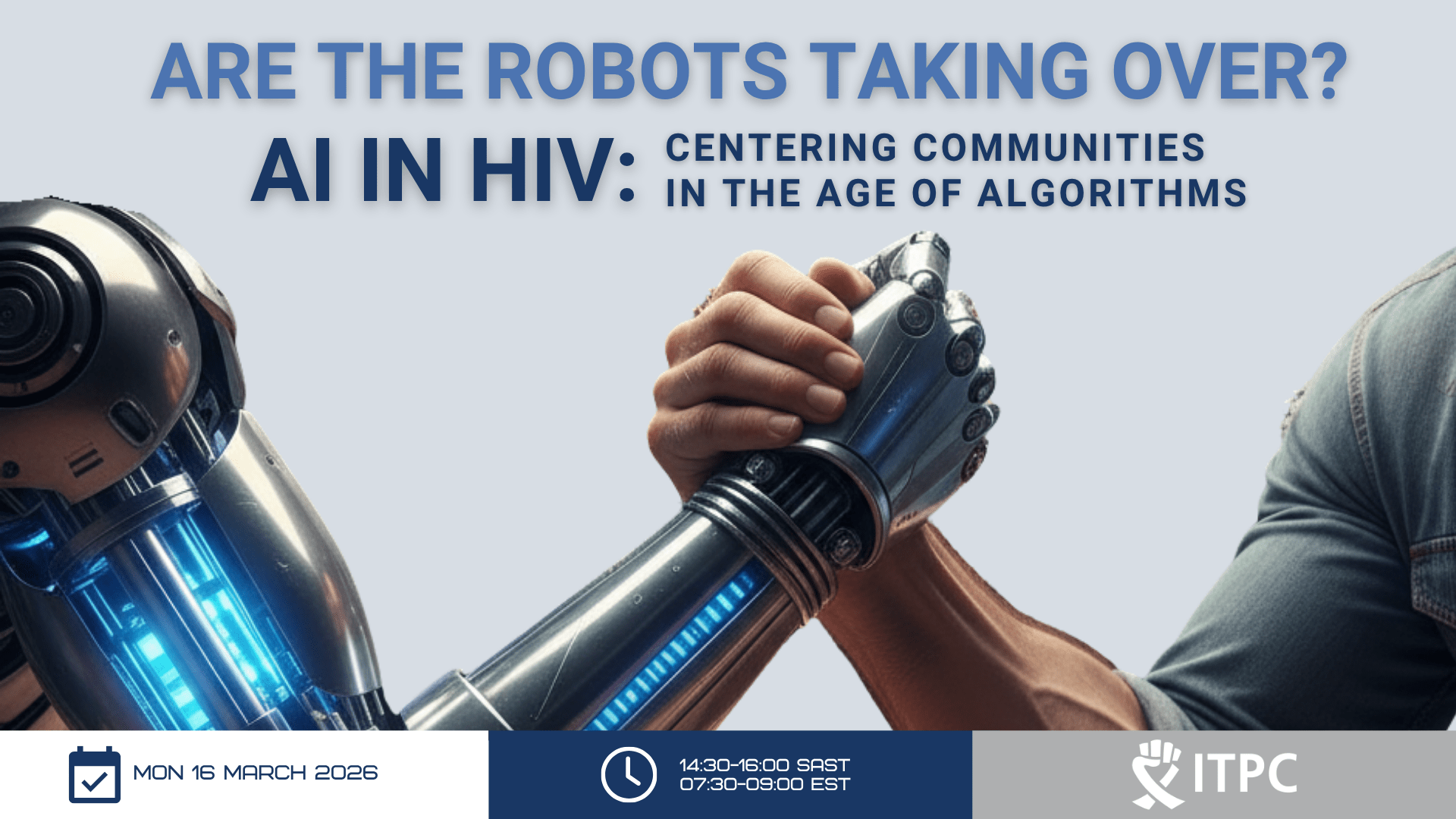
Are the Robots Taking Over? AI, HIV, and the Fight to Keep Communities in Charge
“AI has the potential to expand access to HIV information for people who might otherwise feel too afraid or stigmatised to ask questions – but technology alone cannot eliminate stigma.” – Tatiene Ngoie, CHAPS South Africa A few years ago, when people talked about robots taking over the world, we laughed. It sounded like something out of a science-fiction movie. Well, here we are. If you used ChatGPT this week, or if a robot vacuum cleaned your floors, the age of artificial intelligence is already living with you and it is already shaping the HIV response. On 16 March 2026,…
-
World TB Day Joint Statement
To mark World TB Day 2026, the Global Coalition of TB Advocates (GCTA), together with our global, regional and country partners, are sharing this statement on behalf of those going through TB and those working in the TB response. TB remains the world’s deadliest infectious disease, not for lack of solutions, but because systems continue to fail people. Stigma, inequity, and exclusion are at the core of the crisis. It is time for us to come together and stand united. Read and endorse the full statement: On this World TB Day, we reaffirm our commitment to a world free of…
-
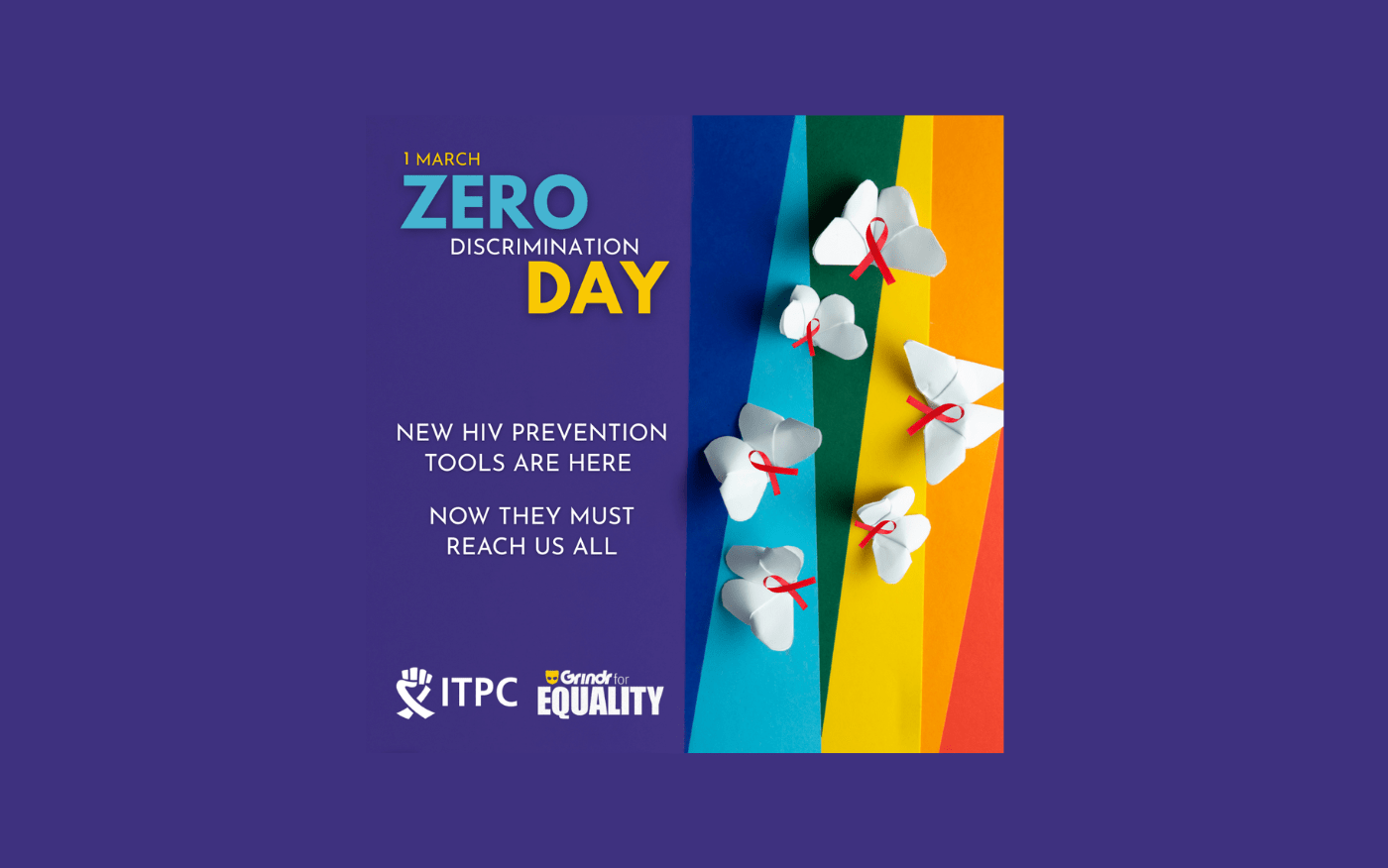
Grindr4Equality & ITPC team up for Zero Discrimination Day (1 March)
The first of March is #ZeroDiscriminationDay – a reminder that health is not a privilege. It is a right – and rights only matter when they can be exercised safely, without stigma, and without fear. It is a global call to end discrimination in all its forms because discriminatory laws and policies shape access to healthcare, fuelling stigma that blocks healthcare. Grindr for Equality and ITPC Global are working together to promote dignity, equality, and access to HIV prevention and treatment without fear. Discrimination on the basis of gender, nationality, age, sexual orientation, religion or health status remains widespread globally.…
-
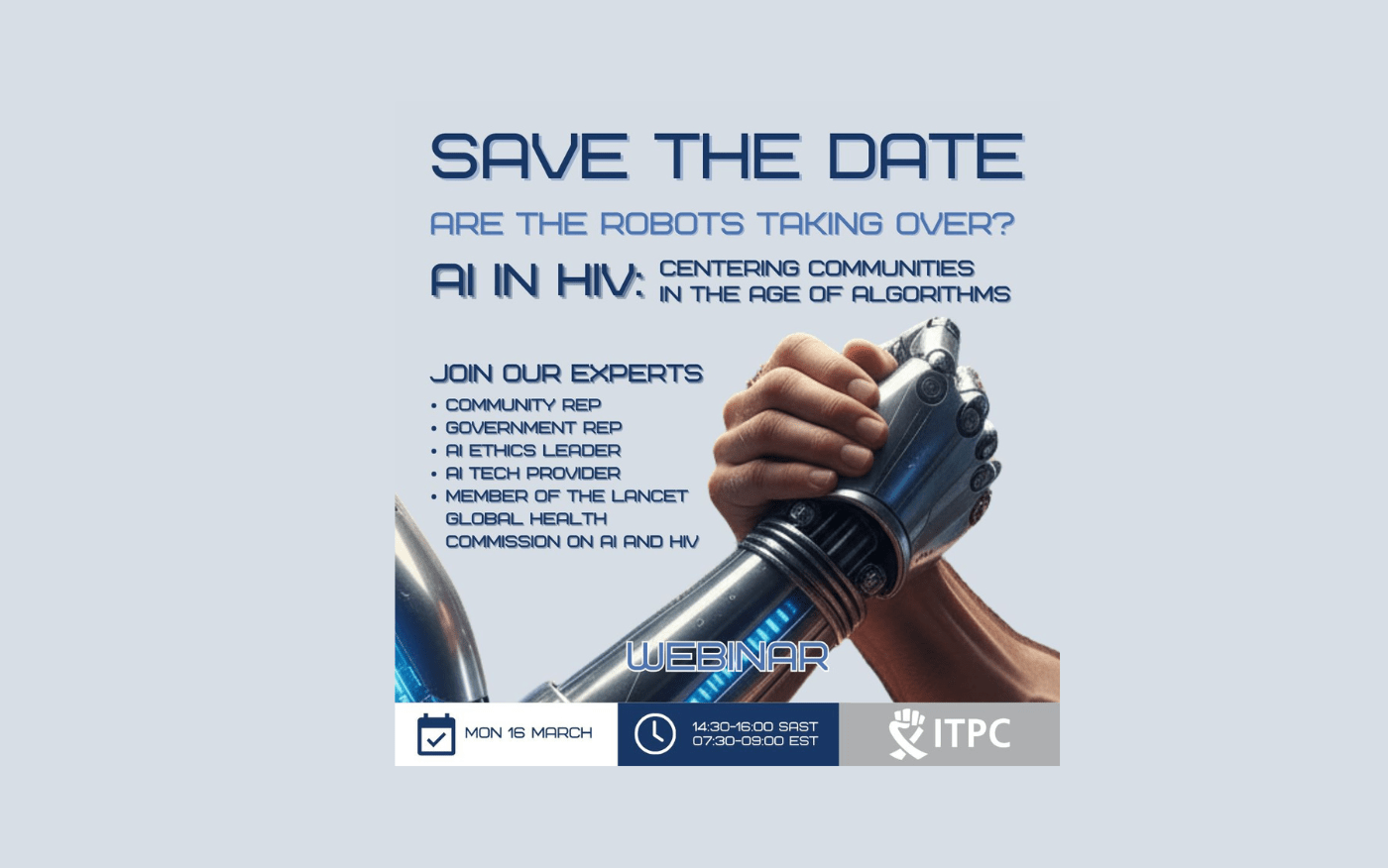
Are the robots taking over the HIV response?
AI is already shaping testing, prevention, adherence support and even drug development. The real question is not whether AI is coming. It is who governs it? Who benefits from it? And who bears the risks? Join ITPC Global on Monday 16 March at 2:30pm SAST for a bold, community-first conversation on AI in HIV. We will explore: The Lancet Global Health Commission on AI and HIV was launched in April 2025. Read more here. If AI is going to shape the HIV response, communities must shape AI.
-
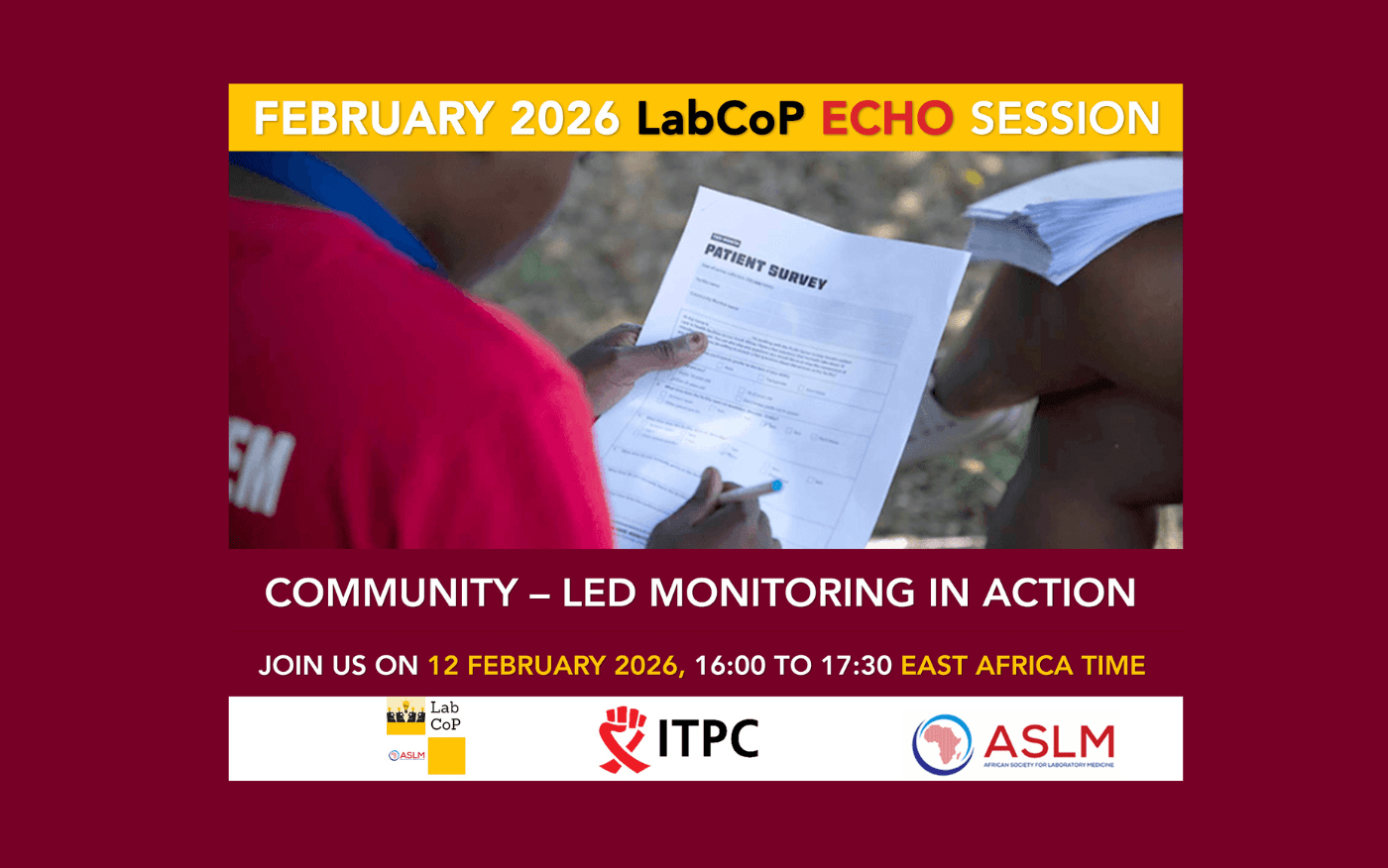
Webinar: Community-Led Monitoring (CLM) in action
Join us on Thursday, 12th February 2025, 4:00 PM EAT, for our LabCoP ECHO session, developed in partnership with ITPC, where we discuss how communities are protecting HIV diagnostic services in a time of crisis Community-led monitoring (CLM) is a participatory approach that empowers communities to systematically collect and analyze data that is used to improve health services and address local challenges. ASLM Laboratory Systems Strengthening Community of Practice (LabCoP), in collaboration with ITPC Global, is convening an ECHO session highlighting how community-led monitoring (CLM) is generating critical evidence to protect and improve access to WHO- and nationally recommended HIV diagnostic and laboratory…